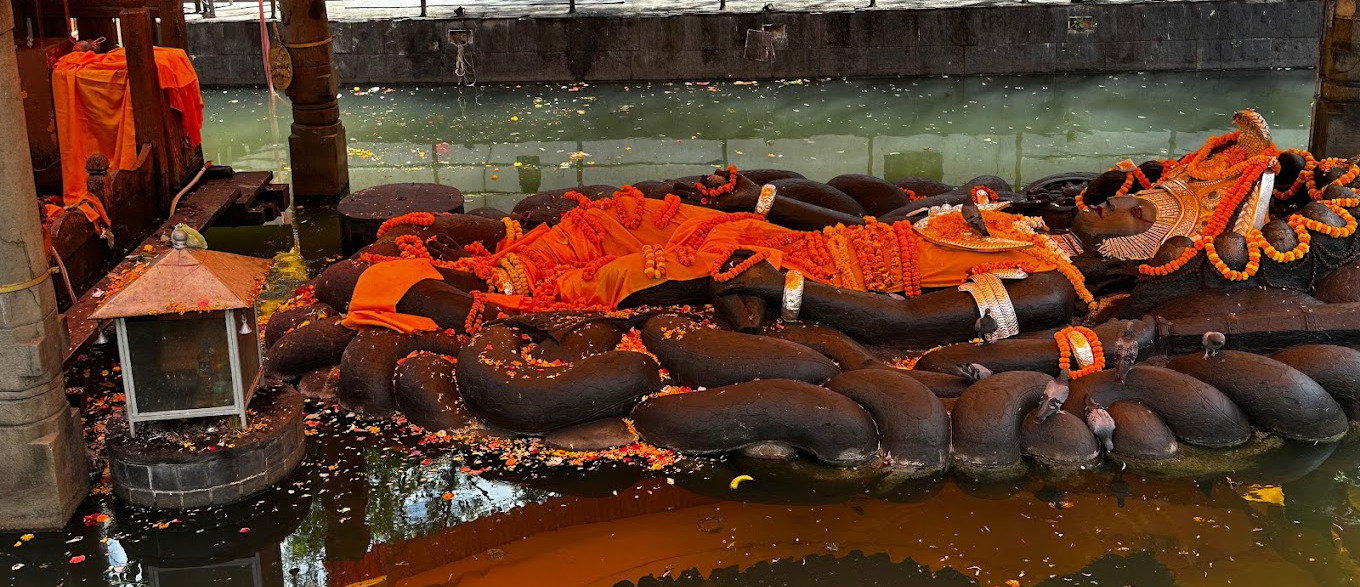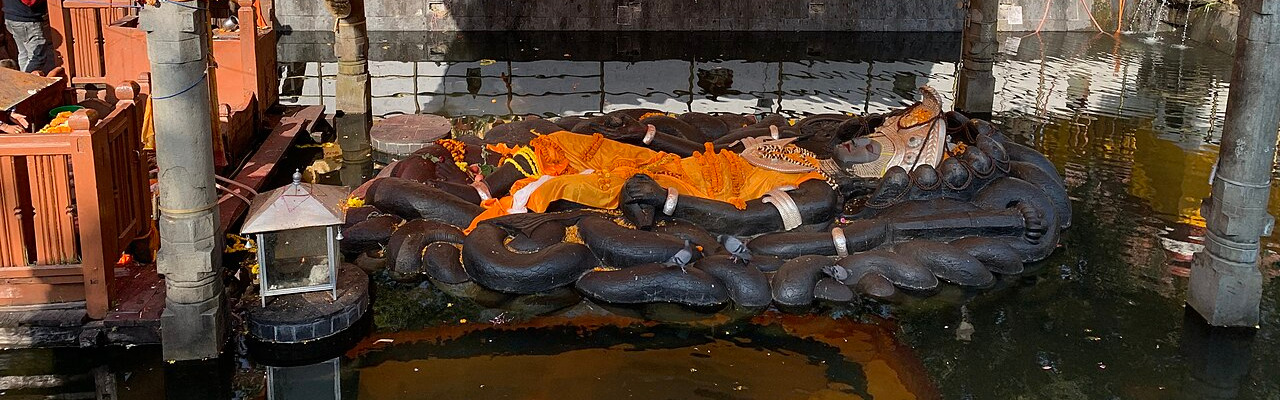
Budhanilkantha Temple, located in Budhanilkantha, Nepal, is a Hindu open air temple dedicated to Lord Mahavishnu. Budhanilkantha Temple is also known as the Narayanthan Temple, and can be identified by a large reclining statue of Lord Mahavishnu.
Religious Significance
Some people associate Budhanilkanth's name with Gautama Buddha since it pronunciation being closely similar but this is not a correct fact. Though the temple is named Budhanilkantha, its name does not come from the Buddha; Budhanilkantha instead has a Sanskrit origin that means ‘Old Blue Throat’, a title of Lord Shiva that was given by gods after the Lord drank poison to save the world. The statue symbolizes Lord Vishnu, who is regarded as one of the 'Trimurtis', along with Brahma and Shiva.
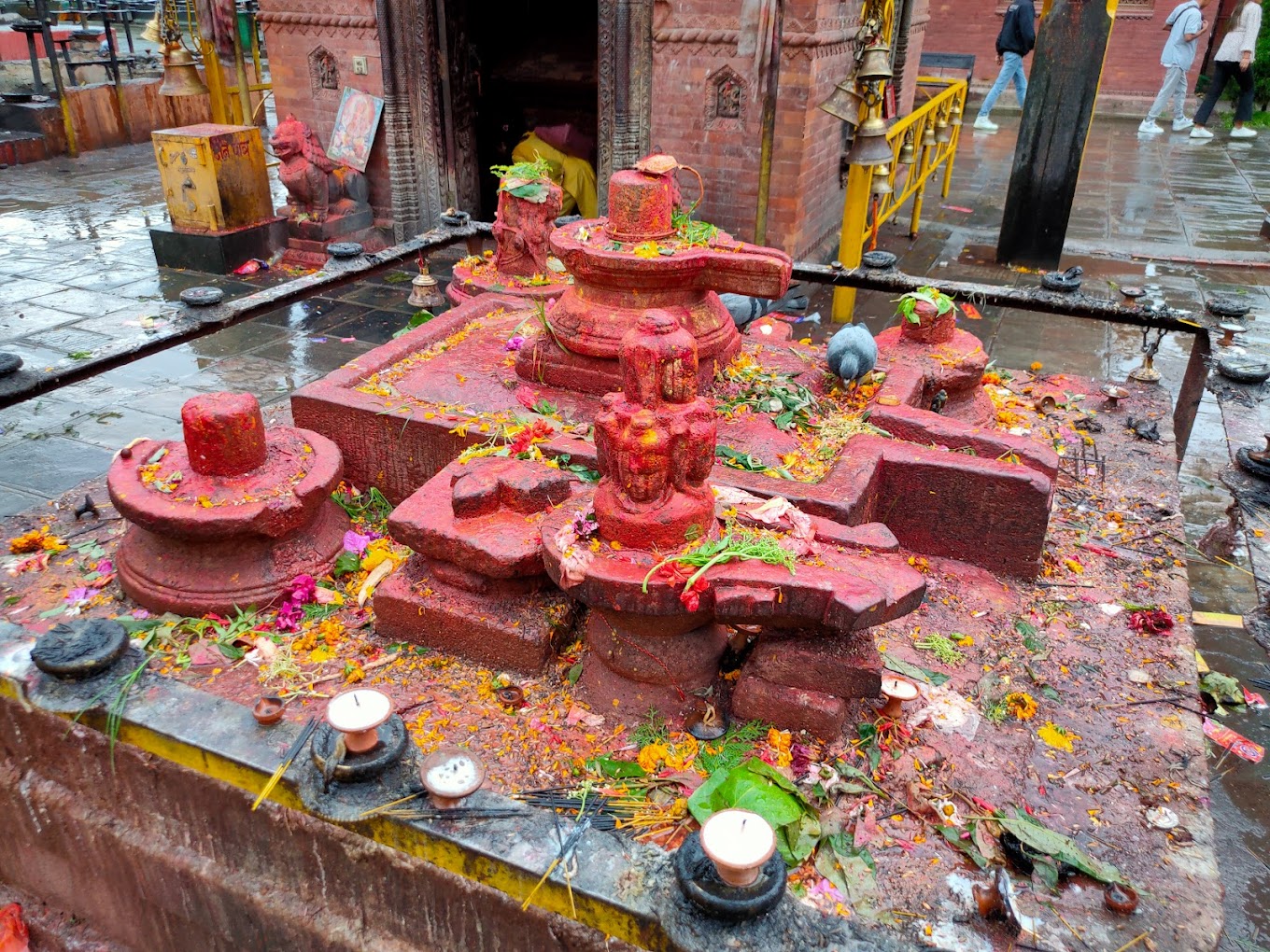
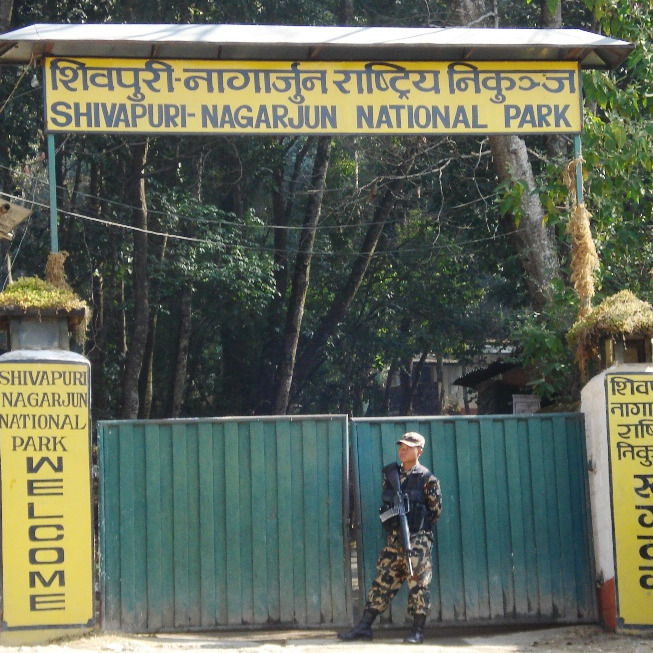
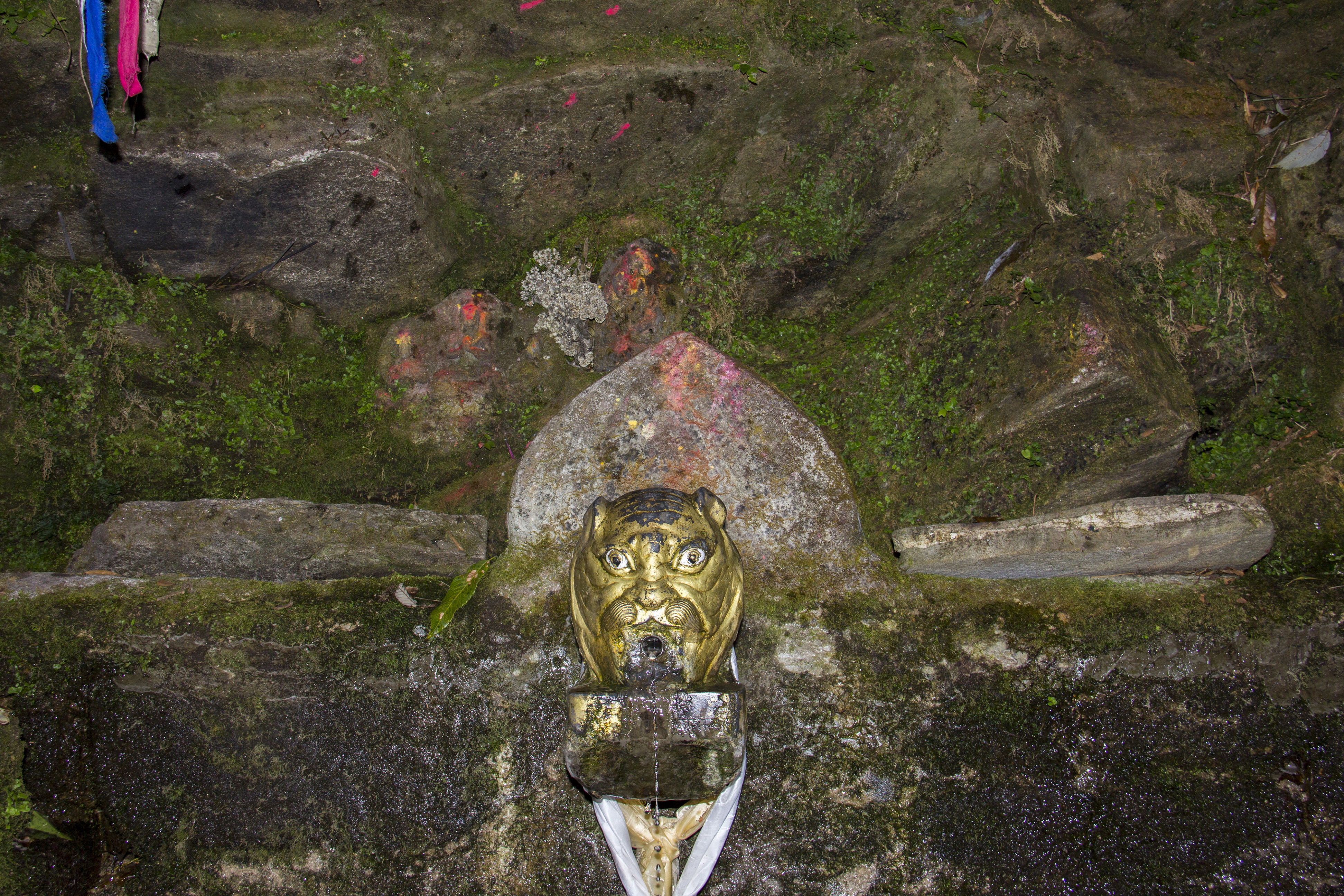
The Hindu scriptures Bhagavata Purana, Vishnu Purana and the epics Ramayana and Mahabharata refer to Samudra manthan, which is directly related to the origin of Gosaikunda. According to legend the spring that feeds the pond in the Budanilkantha temple is connected to Gosaikunda which makes it to have a direct connection to the water source from Lord Shiva. This is the reason why its name is dedicated to Lord Shiva even though the statue is dedicated to Lord Vishnu since the water pond on which the statue lies, has its source to Gosaikunda dedicated to Lord Shiva which was the result of him drinking the poison and storing it in his throat resulting in him having blue throat.
This temple is regarded as a sacred place for Hindus but is equally well venerated by Buddhists (who consider the murti to be Buddha). It is considered as a sign of religious harmony that has existed in the region since ancient times .
Budhanilkantha Temple, dedicated to Lord Vishnu, is a significant pilgrimage site in Nepal. As such, several Hindu festivals are celebrated there throughout the year, attracting thousands of devotees. The most prominent and major festivals are:
Haribodhini Ekadashi (also known as Prabodhini Ekadashi or Devotthan Ekadashi):
Significance: This is the most important festival at Budhanilkantha. It marks the awakening of Lord Vishnu from his four-month cosmic sleep (Chaturmas). The statue of Vishnu at Budhanilkantha depicts him in his cosmic sleep, so this festival holds immense importance.
Timing: It usually falls on the 11th day of the waxing moon in the Hindu lunar month of Kartik (October-November).
Celebration: Thousands of pilgrims gather at the temple for this occasion. Special rituals, prayers, and a grand fair (mela) are held. Devotees offer prayers, fast, and participate in the festivities to express gratitude to Lord Vishnu. There's often a ceremonial procession of Lord Vishnu's idol. This day also marks the "Tulsi Vivah," a symbolic marriage of the holy basil plant (Tulsi) with Lord Vishnu (represented by a Shaligram stone).
Harishayani Ekadashi (also known as Devshayani Ekadashi):
Significance: This festival marks the beginning of Lord Vishnu's cosmic sleep, the "Chaturmas" period, which lasts for four months.
Timing: It typically falls on the 11th day of the waxing moon in the Hindu lunar month of Ashadh (June or July).
Celebration: Devotees gather to offer prayers and perform rituals to honor Lord Vishnu as he enters his state of divine rest. Fasting and charity are common practices on this day.
While these two Ekadashis are the main festivals directly linked to Lord Vishnu's cosmic sleep and awakening, other Hindu festivals are also observed at Budhanilkantha Temple, drawing devotees:
Shivaratri: Although Budhanilkantha is primarily a Vishnu temple, Shivaratri (dedicated to Lord Shiva) is a major Hindu festival celebrated with fervor across Nepal, and some devotees may visit the temple during this time.
Krishna Janmashtami: This festival celebrates the birth of Lord Krishna, an avatar of Lord Vishnu. While not the primary focus, some devotees may visit Budhanilkantha to offer prayers.
Ram Navami: This festival celebrates the birth of Lord Rama, another important avatar of Lord Vishnu.
Dashain: As Nepal's biggest annual festival, Dashain sees many people visiting temples to seek blessings, and Budhanilkantha is no exception, even if it's not directly the central celebration for Dashain.
Naulin Bhadrakali Jatra: This is a vibrant chariot festival celebrated annually in Budhanilkantha, near the Naulin Bhadrakali Temple. It typically occurs around Baisakh Purnima (April/May) and involves various rituals and processions.
The Haribodhini Ekadashi Mela is undoubtedly the most significant event in the Budhanilkantha Temple's annual calendar, attracting the largest crowds and showcasing the temple's deep religious importance.
© 2026 Budhanilkantha Tourism Board.
Powered by Budhanilkantha Municipality, Office of the Municipal Executive